

Ukulele vs Guitar: Which Should You (or Your Child) Learn First?
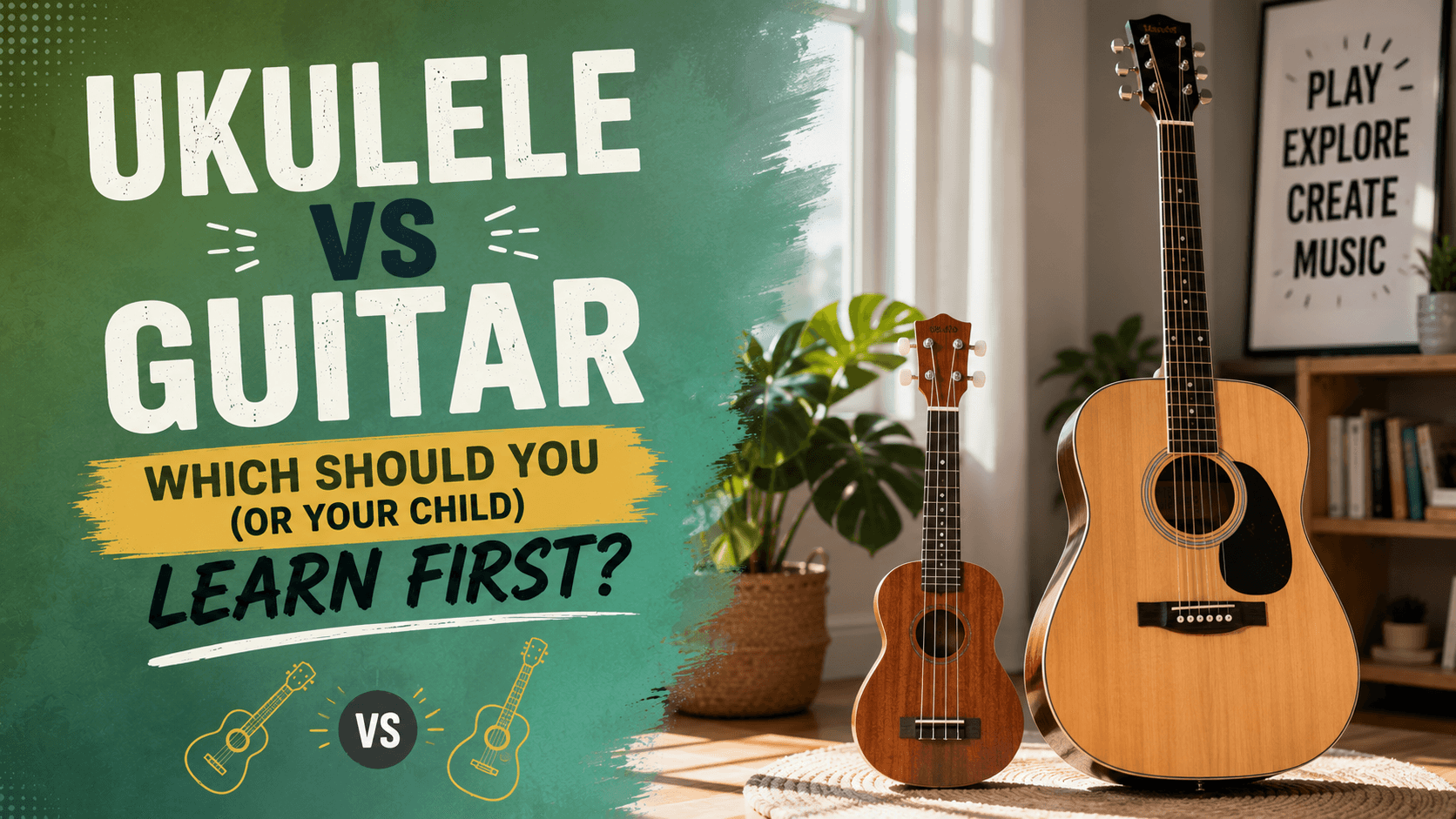
They look like close cousins, and in many ways they are – but the ukulele and the guitar offer genuinely different starting experiences. Choosing between them comes down to age, goals and the music you’re itching to play.
We teach both at Manhattan Music, and we see the same question from parents and adult beginners alike. Here’s an honest comparison to help you choose, starting with what makes ukulele lessons at Manhattan Music such a popular entry point.
The Key Differences at a Glance
Size and weight. A ukulele is small and light enough for a four-year-old to hold comfortably. Even child-sized guitars are larger and heavier.
Strings. Ukuleles have four soft nylon strings. Guitars have six, and on acoustic and electric models they’re steel – which means more finger strength required and a short sore-fingertips phase for beginners.
Sound. The ukulele has a bright, cheerful, instantly sunny voice. The guitar has a broader range – it can be gentle, driving, heavy or delicate, which is exactly why it dominates so many genres.
Cost. Playable starter ukuleles cost noticeably less than starter guitars, making the ukulele the lowest-risk way to test the waters.
Why Ukulele Is the Easier Starting Point
The ukulele hands out early wins like confetti. With four soft strings and small frets, chords need less strength and less stretch – the C major chord uses exactly one finger. Most beginners strum their first real song in the first session, and that immediate success is rocket fuel for motivation, especially for young kids.
This is why the ukulele has become the go-to first instrument for children around four to six, and a favourite for adults who want to be making music this week, not this year.
Where the Guitar Takes You
The guitar asks more of a beginner up front – tougher strings, bigger stretches, that fingertip-toughening phase – and repays the investment with range. Rock, blues, folk, classical, metal, pop: the guitar is at home in all of them, and playing along with the music you love is a lifelong pleasure the ukulele can only partly match.
For kids, readiness usually arrives between six and eight, when hands and focus have grown into the instrument – our guide to the best age to start guitar lessons covers the signs in detail. For teens and adults drawn to guitar-driven music, there’s a strong argument for starting where your motivation already lives: learning guitar at Manhattan Music meets you at whatever level you arrive.
Does Ukulele Transfer to Guitar Later?
Beautifully – this is the ukulele’s quiet superpower. Ukulele chord shapes map closely onto guitar shapes, so a young ukulele player arrives at their first guitar lesson already understanding chords, strumming, rhythm and changing shapes in time. Ears, hands and performance confidence all carry straight across.
Many of our students follow exactly this path: ukulele at four or five, guitar at seven or eight, and they progress noticeably faster than first-time guitarists the same age. Nothing about starting on ukulele is a detour.
Three Myths Worth Clearing Up
“The ukulele is a toy.” It isn’t. The ukulele is a genuine instrument with real technique, a rich repertoire and world-class players. Small and cheerful does not mean lesser – it means accessible, which is a different thing entirely.
“Starting on guitar is more serious.” The serious choice is the instrument that actually gets practised. A six-year-old strumming their ukulele every afternoon is making far more musical progress than one avoiding a guitar that hurts their fingers.
“You have to finish one before touching the other.” Plenty of musicians happily play both, and the skills reinforce rather than compete. Starting on one is a beginning, not a commitment ceremony.
So Which Should You Choose?
Choose ukulele if: the learner is under six, you want music happening this week, budget is tight, or the goal is simply joyful strumming and singing along.
Choose guitar if: the learner is six or older with hands and patience ready for it, the music that inspires them is guitar music, or the long-term goal involves bands, solos and bigger sonic territory.
Truthfully, there’s no wrong door. Both instruments build rhythm, ear and confidence, and skills flow between them. If you’re choosing for a child and still weighing the wider field, our parent’s guide to choosing a first instrument compares every option – and if it’s the deeper end of stringed instruments calling, we’ve also compared bass guitar and guitar.
Start With Whichever One You’ll Actually Play
The best first instrument is always the one that gets picked up daily. Manhattan Music School in Eltham North teaches both, with accredited teachers, one-on-one lessons and over 20 years of experience helping students across Melbourne’s Northern Suburbs find their instrument – and a Rock Show stage waiting when they’re ready to show it off.
Call us on (03) 9439 4800 or explore our ukulele lesson program to book a trial lesson on either instrument.