

What Instrument Should My Child Learn First? A Parent’s Guide
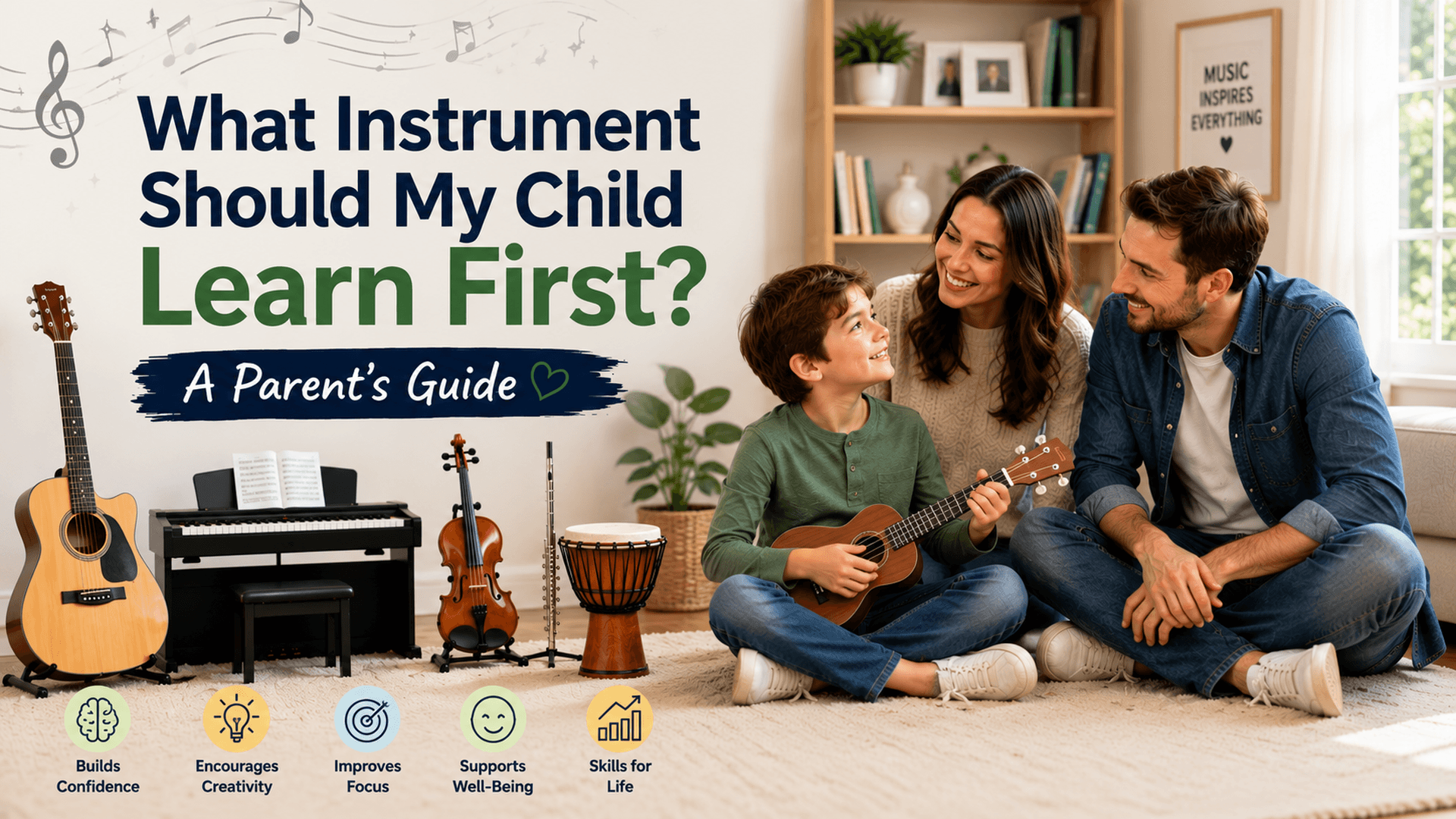
“My child wants to learn music – where do we start?” It’s one of the most common questions we hear from parents, and it’s a great one to be asking. Learning an instrument builds focus, confidence and coordination, and it gives kids a creative outlet they can carry for life.
The honest answer is that there’s no single best instrument for every child – but there is almost certainly a best instrument for your child. After more than 20 years of providing music lessons at Manhattan Music, we’ve helped thousands of families work through this exact decision. Here’s how to think it through.
Start With These Four Questions
How old is your child? Age matters more for some instruments than others. Piano, ukulele and violin can suit kids from around five. Flute usually needs to wait until seven or eight, when arms are long enough and adult front teeth have come through – our guide to when kids can start flute lessons covers the details.
What music do they love? Motivation is the single biggest predictor of whether a child sticks with lessons. A kid who air-drums to their favourite songs will happily practise drums. A kid pushed toward an instrument they feel nothing for will quietly resist.
What’s their temperament? Energetic kids often thrive behind a drum kit. Methodical, detail-loving kids frequently click with piano. Natural performers gravitate to singing. It’s not a rulebook, but it’s a useful starting point.
What will work at home? Think about noise, space and budget. The good news is that headphones on digital pianos and electronic drum kits have solved most of the noise problem for modern families.
Do They Need to Be “Musical” First?
No. Musicality is built through learning, not a prerequisite for it. Almost every child can learn an instrument with patient teaching and regular practice, whether or not anyone in the family plays a note. At Manhattan Music we teach students from age five right up to 91, so there’s no such thing as starting without the right background – or, for that matter, leaving it too late yourself.
The Best First Instruments for Kids (And Who They Suit)
Piano
Piano is often recommended as the ideal first instrument, and for good reason. The layout is visual and logical – every note has its own key, laid out in order – and a child can make a pleasant sound from the very first lesson. Piano also builds music reading and theory foundations that transfer to every other instrument. Most kids are ready to start piano lessons from around age five.
Guitar
Guitar is one of the most requested instruments for kids, and it’s easy to see why: it’s portable, starter instruments are affordable, and it carries a certain cool factor that keeps older kids engaged. It does require a little finger strength and dexterity, so most children start between six and eight – a nylon-string guitar is gentler on young fingers. We’ve covered the readiness signs in our guide to the best age to start guitar lessons, and you can see what’s involved in guitar lessons at Manhattan Music.
Drums
For energetic kids with rhythm in their bones, drums are hard to beat. Drumming builds coordination, timing and focus, and it gives physical kids a productive place to channel their energy. Worried about noise? Electronic kits with headphones make home practice surprisingly neighbour-friendly. Kids can typically start drum lessons from around five or six – see our guide to the right age to start drum lessons for the signs of readiness.
Singing
Singing is the one instrument your child already owns. There’s no equipment to buy, and lessons build breath control, pitch and – perhaps most valuable of all – confidence. Singing lessons suit expressive kids who love to perform, and a good teacher works gently with a young voice as it develops.
Violin
Violin comes in fractional sizes, which means even small children can hold an instrument that fits them – many start around five or six. Because the violin has no frets, it develops a child’s ear like almost nothing else. It does ask for patience in the early months, but with good teaching the progress is steady and genuinely rewarding. Learn more about violin lessons at Manhattan Music.
Flute
Flute is a popular choice, especially once school band programs begin. The main consideration is physical readiness: kids generally need their adult front teeth and enough arm length to hold the instrument comfortably, which usually means seven or eight. If your child is younger and keen, starting on piano or ukulele builds musical foundations that transfer beautifully to flute lessons later.
Bass Guitar
Bass tends to suit slightly older kids and teenagers – often the ones drawn to the groove of a song rather than the melody. Every band needs a bass player, so young bassists are never short of people to play with. Explore bass guitar lessons if your child is drawn to the deep end of music.
Ukulele
The ukulele might be the best-kept secret in kids’ music education. It’s small, inexpensive and has just four soft nylon strings, which means little hands get quick wins – and quick wins build confidence. It’s a brilliant gateway instrument from around age four or five, and the skills transfer directly to guitar later on. See our ukulele lessons for details.
What If They Choose “Wrong”?
Here’s some reassurance: there’s no wrong choice, because nothing is wasted. Rhythm, listening skills, music reading and practice habits all transfer between instruments. Plenty of our students start on one instrument and switch to another a year or two later – and they progress faster the second time around.
This is one of the quiet advantages of a school that teaches many instruments under one roof: your child can switch without changing schedules, locations and teaching styles all over again. It’s one of the things worth weighing up when choosing the right music school.
One more tip: let your child have a genuine say. Kids who feel ownership over the choice practise far more willingly than kids who were signed up for someone else’s favourite instrument.
A Word on Cost
At Manhattan Music, lessons are $40 per half hour across every instrument, so the lesson price never has to sway the decision. Starter instruments vary more – a ukulele costs far less than a drum kit – and we offer a take-home lay-buy system to help spread the cost of an instrument. For a full breakdown, see our guide to what music lessons cost in Melbourne.
Ready to Help Them Start?
Whichever instrument your child is leaning toward, the most important step is simply beginning. Manhattan Music School in Eltham North has been teaching kids across Melbourne’s Northern Suburbs for over 20 years, with accredited teachers, one-on-one lessons and an annual Rock Show where students perform live.
Call us on (03) 9439 4800 or browse all our music lessons to book a trial lesson and find the perfect fit.