

How Long Does It Take to Learn Piano? A Realistic Timeline
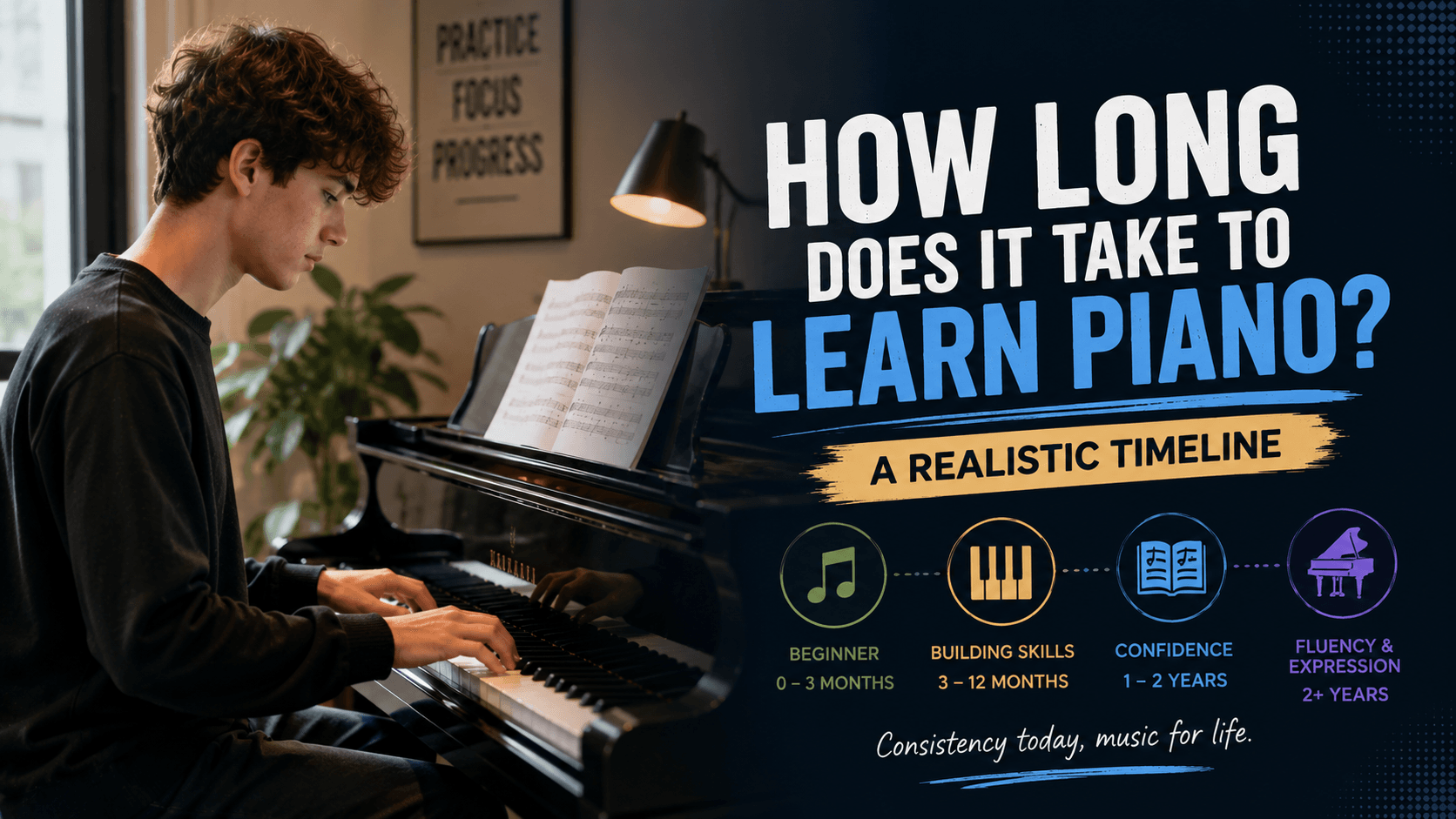
It’s usually the first question a new student asks, sometimes before they’ve touched a key: how long until I can actually play?
The honest answer is that it depends on your goals, how regularly you practise, and whether you’re learning with guidance. But “it depends” isn’t much use for planning, so here’s the realistic timeline we’ve seen play out across more than 20 years of piano lessons at Manhattan Music – along with what genuinely speeds progress up.
The Short Answer
Most students can play simple melodies within their first few weeks, and recognisable pieces with both hands within three to six months. By the end of the first year, a consistent student is typically playing comfortably at an early-grade level. Reaching a confident intermediate standard – where you can pick up new pieces independently and play with real expression – usually takes two to three years of steady practice.
One of piano’s underrated advantages: it sounds good immediately. Press a key and you get a clean, pleasant note – no squeaks, buzzes or sore fingertips standing between you and music. That early encouragement matters more than people realise.
What to Expect at Each Stage
Months 1-2: Foundations and First Melodies
The opening weeks cover posture, hand position and finger numbers, then move quickly into simple five-finger melodies – usually one hand at a time. Reading music begins here too, gently: most students are surprised how naturally the notes on the page start mapping to keys under their fingers.
Months 3-6: Both Hands Together
This is the stage where it starts feeling like really playing. Hands begin working together, first with simple accompaniment patterns, then with genuinely independent parts. Full easy pieces come together, basic chords appear, and reading becomes steadily more fluent. Working toward songs you actually like makes this stage fly – our list of easy piano songs for beginners is full of good targets.
Months 6-12: Confidence and Control
The second half of the first year brings scales and technical work, dynamics (playing louder and softer with intention), and usually the sustain pedal – the moment the piano starts to sing. Students who want a formal pathway often sit their first AMEB or ANZCA exam around this stage; students who don’t simply keep building repertoire they love. Both paths are equally valid at Manhattan Music.
Years 1-3: Becoming an Intermediate Player
Beyond the first year, pieces get more ambitious, expression gets more personal, and music taste starts steering the journey – classical, pop, jazz, film themes, or all of the above. This is also where a teacher earns their keep most visibly, catching the technique issues that quietly cap self-taught players and keeping progress moving when motivation dips.
It Depends What “Learning Piano” Means to You
The timeline above describes a typical all-round student, but your destination changes the journey. If your goal is playing favourite songs for your own enjoyment, you’ll get there fastest of all – chord-based popular songs are within reach inside the first year, and every month adds more of them.
If you’re aiming at the formal exam pathway, expect a steadier climb: many students progress through roughly a grade per year in the early levels, and Manhattan Music’s teachers prepare students for AMEB, Rockschool and ANZCA examinations as standard.
And if you want piano as a supporting skill – most commonly singers learning to accompany themselves – the useful part arrives quickly, because accompaniment leans on chords and patterns rather than virtuosic technique. It’s a popular combination among our students taking singing lessons as adults.
What Actually Speeds Up Progress
Consistency beats duration. Fifteen to thirty focused minutes a day comfortably outperforms a single long weekend session. The fingers and the brain both prefer little and often.
A decent instrument at home. Practising on a proper instrument with weighted, touch-sensitive keys builds technique that transfers straight to any piano. If you’re not sure what to buy, our piano and keyboard buyer’s guide breaks down the options and budgets – and any keyboard genuinely beats no keyboard.
Structured lessons. Videos can show you pieces, but they can’t watch your hands. A teacher sequences skills in the right order, fixes small problems before they become habits, and tailors everything to how you learn.
Playing music you love. Motivation is fuel. Students progress fastest when at least part of every practice session is something they’d choose to play anyway.
And a reassurance for older beginners: age is not the barrier people fear. Adults often progress faster than children in the early stages because they understand instructions conceptually and practise with purpose. Our students range from five to 91.
How Does Piano Compare to Other Instruments?
Every instrument trades difficulty differently. Piano gives you clean notes from day one – there’s no wrestling a sound out of it the way there is with violin – but two-hand independence is its signature challenge, and it arrives in month three rather than minute one. The overall arc, though, looks a lot like other instruments: weeks to play something, months to feel capable, a couple of years to genuine confidence. For comparison, see how long it takes to learn guitar.
Ready to Start the Clock?
The timeline only starts when you do. Manhattan Music School in Eltham North has been teaching piano to students of all ages across Melbourne’s Northern Suburbs for over 20 years, with accredited teachers, one-on-one lessons and pathways for exams or pure enjoyment – your choice.
Call us on (03) 9439 4800 or visit our piano lesson program to book a trial lesson.