

How to Warm Up Your Voice Before Singing (5 Essential Exercises)
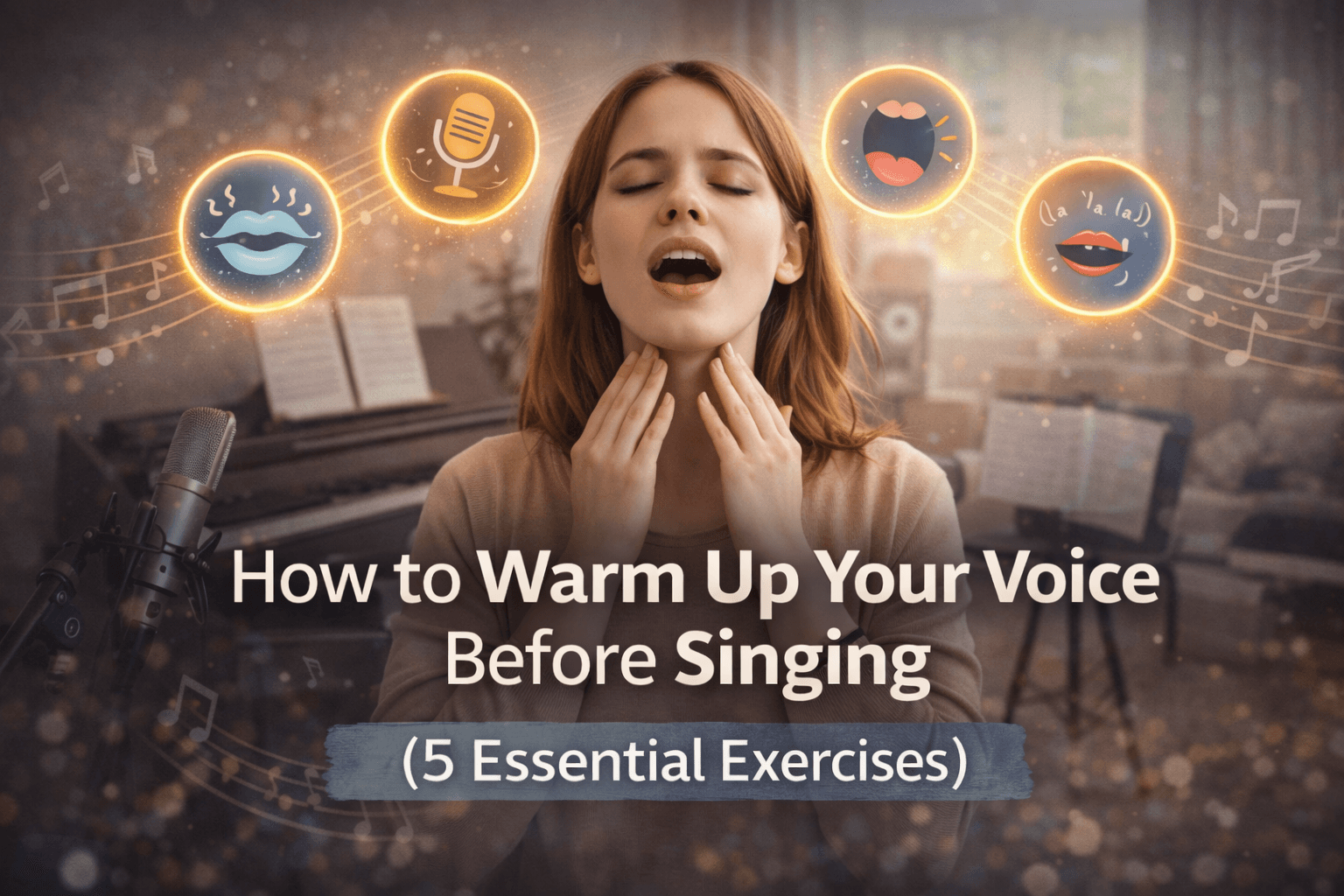
You wouldn’t sprint without stretching your legs first, and your voice deserves the same respect. Whether you’re preparing for professional vocal training, a rehearsal, or just singing along in the car, a proper warm-up makes a noticeable difference to how you sound and how your voice feels afterwards.
The good news? It only takes 5 to 10 minutes. Here are five essential exercises that vocal coaches — including the team at Manhattan Music — recommend to every singer, from complete beginners to experienced performers.
Why Warming Up Matters
Your vocal cords are muscles. When you sing without warming up, you’re asking cold, tight muscles to perform demanding work. This can lead to strain, reduced range, a scratchy tone, and in the long run, vocal damage.
A warm-up gently engages your vocal cords, increases blood flow to the muscles involved in singing, and prepares your breath support system. Think of it as tuning your instrument before you play. Even professional singers warm up before every session — it’s not optional, it’s essential.
5 Essential Vocal Warm-Up Exercises
1. Lip Trills (Lip Bubbles)
What it develops: Breath control, facial relaxation, and even airflow.
How to do it: Relax your lips and blow air through them so they vibrate together, creating a “brrr” or motorboat sound. Once you’ve got a steady trill going, add pitch — slide gently up and down through your comfortable range while maintaining the lip vibration. If your lips stop vibrating, you’re either pushing too hard or not using enough air. Find the sweet spot where the trill sustains itself effortlessly.
How long to spend: About 1 to 2 minutes. Start on a comfortable mid-range note and gradually explore higher and lower pitches.
Lip trills are a favourite warm-up among professional singers because they engage your breath support without putting any strain on the vocal cords. They’re the gentlest possible way to wake your voice up.
2. Humming Scales
What it develops: Gentle vocal cord engagement, pitch awareness, and resonance.
How to do it: Close your lips lightly and hum up a simple five-note scale (do-re-mi-fa-sol) and back down. Keep the sound forward — you should feel a gentle buzzing vibration around your nose and lips, not deep in your throat. Start in the middle of your range and move the scale up by a half step each time, then work back down.
How long to spend: About 1 to 2 minutes. If anything feels tight or strained, drop back to a lower starting note.
Humming is wonderfully low-effort, which makes it ideal early in your warm-up. It gets your cords vibrating and your pitch centres engaged without any heavy lifting.
3. Sirens
What it develops: Range, smooth transitions between vocal registers, and flexibility.
How to do it: Using an “ooh” or “eee” sound, slide continuously from the lowest note you can comfortably produce all the way up to the highest, and then back down again — like a siren. Keep the sound connected throughout; don’t let it break or jump. The goal isn’t volume or power. Keep it light, especially at the top of your range. You’re stretching, not straining.
How long to spend: About 1 minute. Do 4 to 6 full siren sweeps.
Sirens are excellent for finding and smoothing over your “break” — that sometimes awkward transition point between your chest voice and head voice. Over time, this exercise makes that transition virtually seamless. Exercises like this are proof that technique trumps genetics — if you’ve ever wondered about the truth about natural talent vs training, the results speak for themselves.
4. “Mah-May-Mee-Moh-Moo” Vowel Slides
What it develops: Diction, vowel placement, and jaw openness.
How to do it: On a single sustained note, sing through the five vowel sounds slowly: “Mah — May — Mee — Moh — Moo.” Focus on keeping your jaw relaxed and open, and notice how the shape of your mouth changes for each vowel while the pitch stays the same. Then repeat the sequence on a higher note, and again on a lower note.
How long to spend: About 1 to 2 minutes across several different pitches.
This exercise trains your mouth and tongue to move independently of your pitch control — a coordination skill that’s essential for clear, expressive singing. Many beginner singers tighten their jaw when reaching for higher notes, and vowel slides help break that habit.
5. Gentle Scales on “La”
What it develops: Full voice engagement, tone production, and controlled projection.
How to do it: Sing a five-note ascending and descending scale on the syllable “La.” Use a comfortable, supported tone — not breathy, not belting. Move the scale up by a half step each round, and stop before you reach notes that feel effortful. “La” is ideal because it naturally opens the throat and encourages a warm, resonant tone.
How long to spend: About 2 minutes. This is your final warm-up exercise, so by now your voice should feel engaged and ready.
By the time you finish this exercise, your voice should feel noticeably different from when you started — more flexible, more resonant, and more responsive.
Tips for an Effective Warm-Up Routine
A few principles to keep in mind as you build warming up into your singing habit:
- Start gently. Begin with the quieter, less demanding exercises (lip trills and humming) before moving to full-voice scales.
- Don’t push the extremes of your range early. Save your highest and lowest notes for after your voice is fully warmed.
- Stay hydrated. Room-temperature water is your best friend. Avoid very cold drinks or dairy right before singing.
- Avoid whispering. Here’s something most people don’t realise: whispering is actually harder on your voice than speaking at a normal volume. The vocal cords have to work in an unnatural way to produce a whisper, which creates tension. If you’re tempted to “save” your voice before a performance, just speak normally instead.
- Listen to your body. If something hurts or feels strained, stop. Discomfort is a signal, not a challenge to push through.
- Be consistent. Five minutes before every practice session will do more for your voice than an occasional 30-minute warm-up.
These exercises are great for adult beginners to practise between lessons. If you’re considering singing lessons for adults, a personalised warm-up routine tailored to your voice is one of the first things your teacher will help you build.
Make Warm-Ups Part of Your Singing Journey
These five exercises are a solid foundation, but they’re even more effective when guided by a qualified teacher who can adapt them to your voice and goals.
At Manhattan Music School in Eltham North, our AMEB, Rockschool, and ANZCA accredited vocal teachers work with students of all ages and levels across Melbourne’s Northern Suburbs. Whether you’re warming up for your first lesson or preparing for our annual Rock Show, we’re here to help your voice thrive.
Get in touch on (03) 9439 4800 or explore our singing lesson program to get started.